


Google Flow
3.8676.00 Reviews
App Specs
- Version
- 1.591.0
- Updated On
- License
- Free
- Downloads
- 10,000,000+
- Developer
- Google Labs
- Categories
- Art & Design
- Platform
- Android
Screenshots
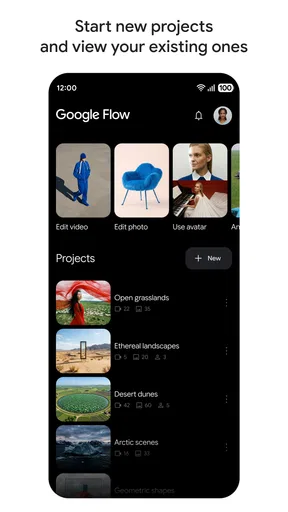
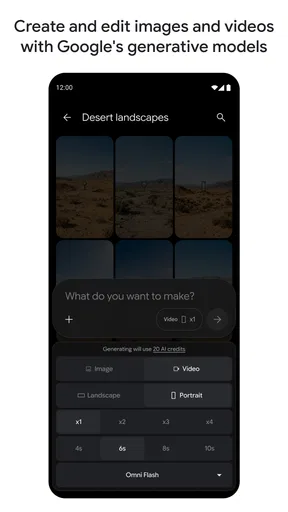
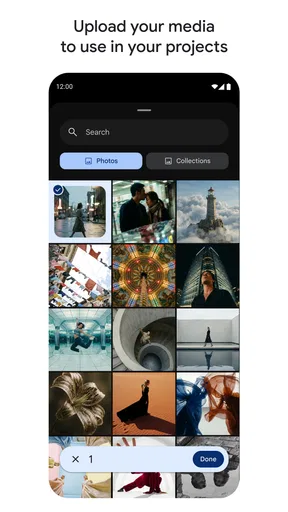
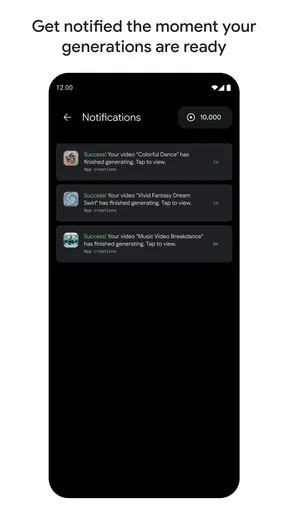
 Analysis by AppCompare
I approach Google Flow Beta differently from a conventional planner: it is presented as an AI creative studio, so the useful question is whether it helps you turn a rough idea into something you can work with. That makes it most appealing when you want to explore visual concepts, not when you simply need another place to record appointments. I’d treat it as a companion for experimentation rather than assume it will replace a familiar design tool or a dependable daily organizer.
Where the first sticking points tend to be
With a creative app, the first hurdle is often not finding a button; it is deciding what to ask for. A vague request can lead to a result that feels generic, while a prompt overloaded with details can make it harder to judge which parts of the idea matter. I get better results by starting with one clear goal, such as exploring a mood for a poster or finding a visual direction for a personal project, then refining the request after I see what the tool gives me.
That approach also makes it easier to tell whether a result is genuinely useful. Instead of expecting the first attempt to be finished artwork, I treat it as a sketch in conversation: identify what is working, name one thing that is off, and adjust that part. This is a practical way to keep creative exploration from turning into a string of unrelated tries.
Setup checks before you judge the experience
Google Flow Beta is a free Art & Design app from Google Labs, with a Teen content rating. It has an average rating of 3.7 from around 1,600 ratings, and more than 1 million installs. Those figures suggest plenty of people have tried it, but they do not tell me whether its particular creative workflow will suit you; that depends on what you want to make and how much back-and-forth you enjoy.
If the app does not behave as expected, I would check the basics before blaming the creative tools: confirm that the installation completed, reopen the app, and make sure the device meets its minimum operating-system requirement of Android 7.0. The current version is 1.447.0. As with any app, keeping the installed version current can help avoid problems already addressed by an update, though it cannot guarantee that every issue will disappear.
It is also worth starting with a small, low-stakes idea rather than a project with a deadline. That gives you room to learn how the app responds and whether its style and output are close enough to your needs. If you are evaluating it for a particular task, use a prompt related to that task; a random test may tell you less than a modest, realistic experiment.
Recovering a workflow without wasting the session
Creative iteration can feel messy when an early result misses the mark. I find it useful to keep a short note of the central idea and the changes I have already tried. Then, if I need to start again, I can preserve the useful direction instead of rebuilding the whole brief from memory. This habit is especially helpful when comparing two visual approaches: change one important detail at a time, so you can see what actually made a difference.
Worth Reading Before You Choose

Baby Panda World Brings Quick Play to Modern Phones, but Its Game Library Feels Busy

ESPN’s Live Game View Makes Following Close Games Easier

QuizzLand Review: A Good Fit for Short Trivia Breaks, Not Every Player

Basketball Stars: Multiplayer Is Fast, but Can It Recover When Matches Go Wrong?

WEBTOON Turns Phone Updates Into a Better Reading Routine

Link to Windows Runs on Shared Habits, Not Social Feeds
If a request stalls or the app seems unresponsive, avoid sending the same complicated instruction repeatedly. Give it a moment, then try a simpler version of the request or reopen the app and make a fresh attempt. That is sensible general troubleshooting, not a promise about how every interruption is handled. For work you cannot afford to lose, keep your original notes or reference material somewhere separate until you know the result you need is safely available to you.
When the app may not be the cause
A disappointing result does not always mean the app has failed. Sometimes the brief asks for several conflicting things, or the reference in your head is more specific than the words you used. I would revise the prompt to state the subject, the intended mood, and the one detail that matters most. If the result still heads in the wrong direction, that is useful information: the app may not be the best fit for this particular visual job.
It is also reasonable to separate a technical problem from a creative mismatch. If the app opens and responds but the output is not what you imagined, refining the request is more productive than repeating installation steps. If it will not open or complete a basic action, then checking the operating-system requirement, restarting the app, and trying again are sensible first moves.
Getting Started with Google Flow Beta
First things first, setting up Google Flow Beta is a breeze. As soon as you download it from the App Store or Google Play, you're greeted with a clean, intuitive interface. It's like that feeling of walking into a tidy room where everything is in its place. The app offers a quick tutorial, which is super helpful if you're like me and want to get straight to the action.
What makes Google Flow stand out? It's the integration. Imagine having your calendar, to-do list, and notes all seamlessly working together. The app syncs with your Google account, pulling in all your existing data, which means you don't have to start from scratch. It's like the app just knows you.
Features That Shine
One of the standout features of Google Flow is its ability to create what they call "Flows." Think of a Flow as a personalized workflow that helps you tackle specific tasks. For example, if you have a morning routine, you can set up a Flow that includes checking emails, reviewing your calendar, and planning your day. It’s all automated, so you can focus on getting things done rather than setting up your day.
Another cool feature is the integration with Google Assistant. You can use voice commands to add tasks or check your schedule. It's like having a personal assistant in your pocket. Pretty neat, right?
Design and User Experience
The design of Google Flow is minimalistic but efficient. It's not just about looking good; it's about making sure you can get things done without any hassle. The app uses a lot of white space and simple icons, making navigation straightforward. No clutter, no chaos—just pure productivity.
One thing I really appreciate is the dark mode option. If you're someone who prefers working at night or just likes the aesthetics of dark mode, Google Flow has got you covered. It’s easy on the eyes and helps reduce strain.
Performance and Reliability
Now, let's talk about performance. Despite being in beta, Google Flow runs smoothly. I haven’t experienced any crashes or bugs, which is impressive for a beta version. The syncing is fast, and everything updates in real-time, so you're always on top of your game.
Battery usage is another thing I keep an eye on with apps like this. Fortunately, Google Flow isn't a battery drainer. You can keep it running in the background without worrying about it sapping your phone's juice.
Final Thoughts
So, what's the final verdict? Google Flow Beta is shaping up to be a fantastic tool for anyone looking to streamline their daily routines and boost productivity. It’s packed with features that are not only innovative but also practical.
Of course, since it's still in beta, there might be a few tweaks and updates along the way. But as it stands, Google Flow is definitely worth checking out if you're in the market for a new productivity app. It's like having a personal assistant who never sleeps.
If you're ready to give it a try, you can find the download links on our site. Happy flowing!
Choosing the right job for it
I would reach for a creative studio like this when the goal is to generate possibilities, not when the job requires exact control over every pixel. For example, a student preparing a presentation could use it to explore a few visual directions before building the final slides elsewhere. A small-business owner might use an early concept to discuss the mood of a campaign with a colleague. In both cases, the value is a faster route from an abstract thought to something concrete enough to react to.
For a polished logo, a print-ready layout, or a design that must follow strict brand rules, I would still use a dedicated editor with precise controls. The same goes for work where exact typography, dimensions, layers, or export settings are essential. Google Flow Beta is more compelling at the start of a creative process than as the last stop before publication.
A realistic way to use it during a busy day
Imagine you have ten minutes between errands to find a direction for a birthday invitation. Rather than ask for a finished design all at once, I would first describe the occasion and the feeling I want, then look for one element worth keeping. I might refine the color mood or composition in a second pass, and save the useful idea in my own project notes. That small workflow makes the app a source of inspiration without making a quick experiment responsible for the entire final result.
This method also helps when you are unsure what you want. A first attempt can reveal preferences you could not easily explain beforehand. Keep the parts that help, discard the rest, and make the next request more specific. The trade-off is that this still takes judgment: the app can offer material to consider, but you decide what fits the project and what needs to be created or corrected elsewhere.
How it fits beside familiar design apps
Compared with a traditional drawing or graphic-design app, Google Flow Beta is better approached as a way to explore ideas than as a canvas for painstaking manual editing. A conventional editor gives you direct control and predictable tools; a generative studio can be more useful when you do not yet know what the finished concept should look like. They solve different parts of the job, so I would not expect one to replace the other.
It also differs from a general-purpose notes app. Notes are good for capturing a brief, a checklist, or feedback, while a creative tool is useful when you want to investigate visual possibilities. I would keep the written brief in a place that is easy to revisit and use Flow for the creative portion. That separation is a simple safeguard against losing the original purpose while experimenting.
Small habits that make experiments more useful
One non-obvious improvement is to make each try answer a question. Instead of repeatedly asking for a broad redesign, decide whether you are testing mood, subject emphasis, or composition. Changing one aspect at a time makes it easier to recognize what helped, and it gives you clearer language for the next prompt. It also limits the temptation to keep generating variations without moving toward a decision.
I would keep a compact record of the prompts and ideas that produced the most useful direction. This is not busywork: it helps you return to a concept after a break and distinguish a deliberate improvement from a lucky result. If you are exploring multiple options for someone else, label them in plain language, such as “warmer” or “less formal,” rather than relying on memory alone.
There is a practical boundary here. An appealing generated concept is not automatically ready for a client, a classroom handout, or a public campaign. Check details, suitability, and any requirements of the final medium before using it. For sensitive, high-stakes, or tightly regulated material, I would choose a workflow with stronger human control and review rather than treating an exploratory result as authoritative.
Who will enjoy it—and who may not
I can see Google Flow Beta suiting curious beginners, visual thinkers who get stuck at the blank-page stage, and experienced creators who want another way to test directions. It is especially useful if you are comfortable judging imperfect drafts and doing follow-up work. Since it is free, trying a small personal project is a low-commitment way to decide whether its approach suits you.
It is less attractive if you want a conventional drawing interface, exact design controls, or a guaranteed finished asset with no editing. It may also frustrate anyone who prefers a single predictable result over iterative exploration. The app’s 3.7 average from around 1,600 ratings is a reminder that users’ experiences vary; I would read that as a reason to test it against your own task, not as a verdict on whether it is useful to you.
What to expect from a beta creative tool
The word beta matters because it sets a sensible expectation: I would leave room for rough edges and avoid making it the sole tool in a time-critical workflow. The current version is 1.447.0, and the app has been available since May 18, 2026. Those details help identify the release, but they do not guarantee that every device or creative request will behave the same way. I would keep a backup plan for anything with a firm deadline.
For a first session, choose a project that is interesting but not precious. You can learn whether the app’s responses are useful, whether the iteration feels natural, and whether you prefer it to your normal way of brainstorming. If the answer is no, a sketchbook, a standard design editor, or a notes document may be a better fit—and there is no need to force an AI tool into a workflow it does not improve.
My practical verdict
Google Flow Beta is worth a try if you want help getting from a vague visual idea to a direction you can evaluate. I would use it for brainstorming, early concepts, and low-risk experiments, then move to a more precise tool when the work needs exact finishing. Its strongest role is not replacing creative judgment; it is giving that judgment something to respond to.
Go in with a focused prompt, treat each result as a draft, and keep important project notes outside the experiment until you know what you want to keep. If that sounds like a comfortable way to work, the app may earn a place in your creative routine. If you need dependable, hands-on control from the first stroke to final delivery, I would choose a conventional design app instead.
Pros
- User-friendly interface for easy navigation.
- Seamless integration with Google services.
- Customizable workflow templates available.
- Real-time collaboration features.
- Automated task tracking and reminders.
Cons
- Limited third-party app integrations.
- Beta version may have bugs.
- Requires a Google account to use.
- Some features need internet connection.
- Limited offline functionality.
FAQs for Google Flow
What is Google Flow Beta?
Google Flow Beta is a new productivity app designed to streamline task management and enhance team collaboration. It integrates seamlessly with other Google services, allowing users to create, track, and manage tasks efficiently. This beta version aims to gather user feedback to refine features before the official release.
How do I access Google Flow Beta?
To access Google Flow Beta, you need to sign up through Google's testing program. Once accepted, you can download it from the Google Play Store or Apple App Store. Keep in mind that space may be limited, as beta versions often have a restricted number of testers.
What features are included in Google Flow Beta?
Google Flow Beta includes features such as task assignment, progress tracking, deadline setting, and integration with Google Calendar and Drive. These features are designed to help teams collaborate more effectively, offering tools for communication and project management within one unified interface.
Is Google Flow Beta free to use?
Yes, Google Flow Beta is free to use during the testing phase. Google often provides beta versions at no cost to gather user feedback. However, it's unclear if the final version will remain free or if certain features might require a subscription or one-time purchase.
What are the system requirements for Google Flow Beta?
Google Flow Beta requires Android 8.0 or later and iOS 13.0 or later. Since this is a beta version, make sure your device is compatible and updated to the latest operating system to ensure optimal performance and access to all features. Check the app details for any additional requirements.


